Ganga Aarti in Varanasi
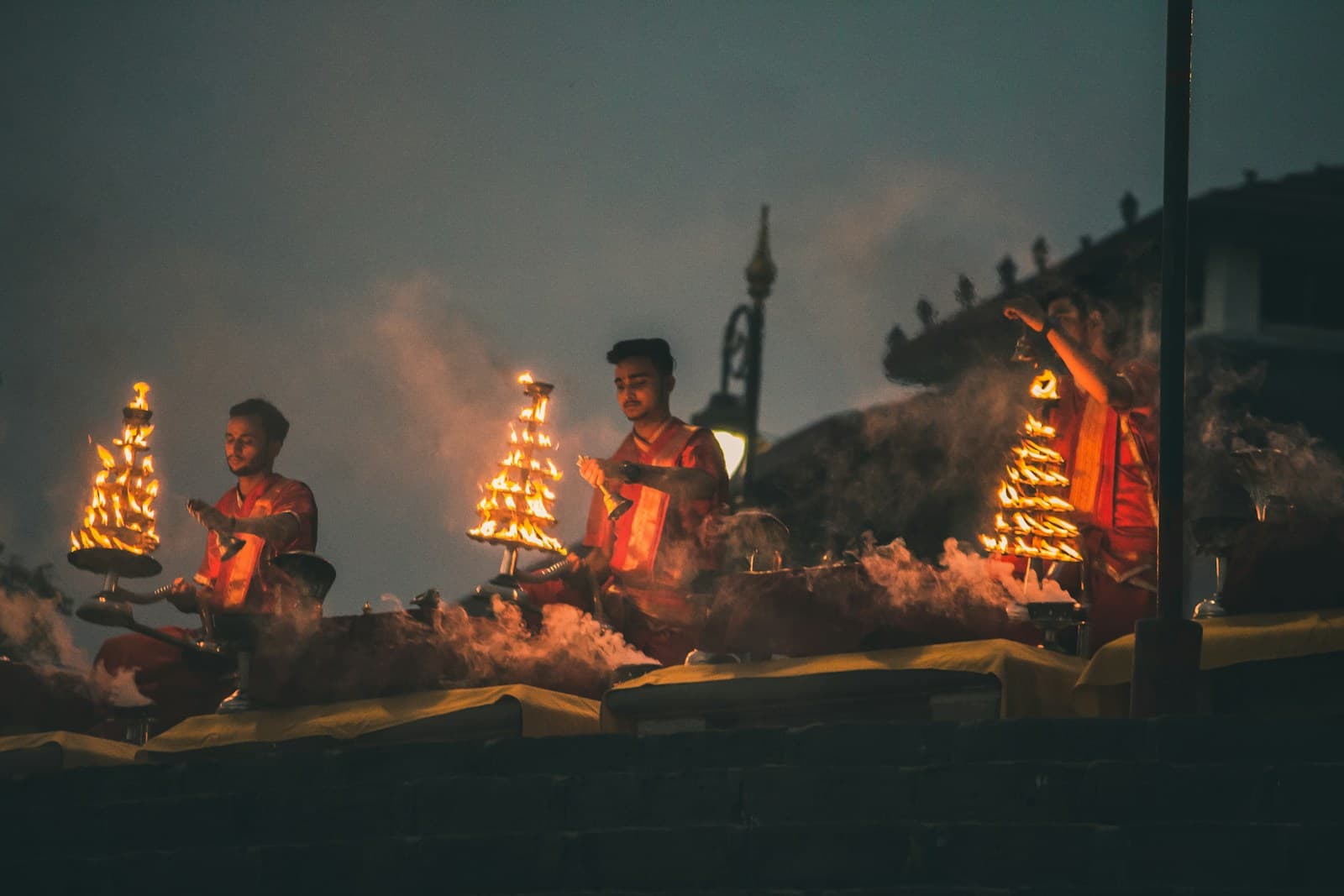
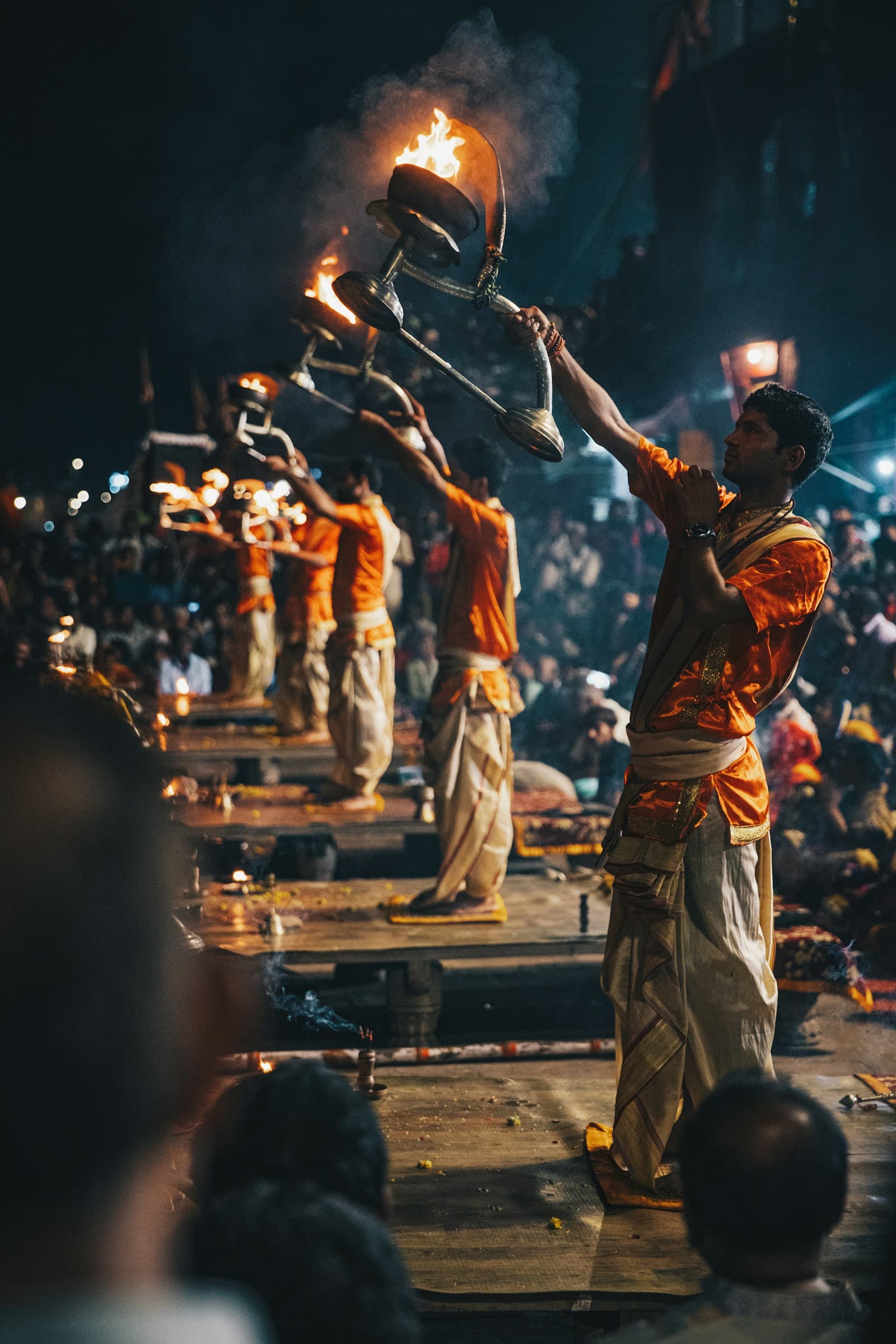
Every evening at sunset, priests in saffron robes offer fire, flowers and chants to Maa Ganga. Here is everything you need to experience it properly.
When does the aarti start?
The ceremony follows the sun, so timings shift with the seasons. Festivals change the schedule — always confirm on the day.
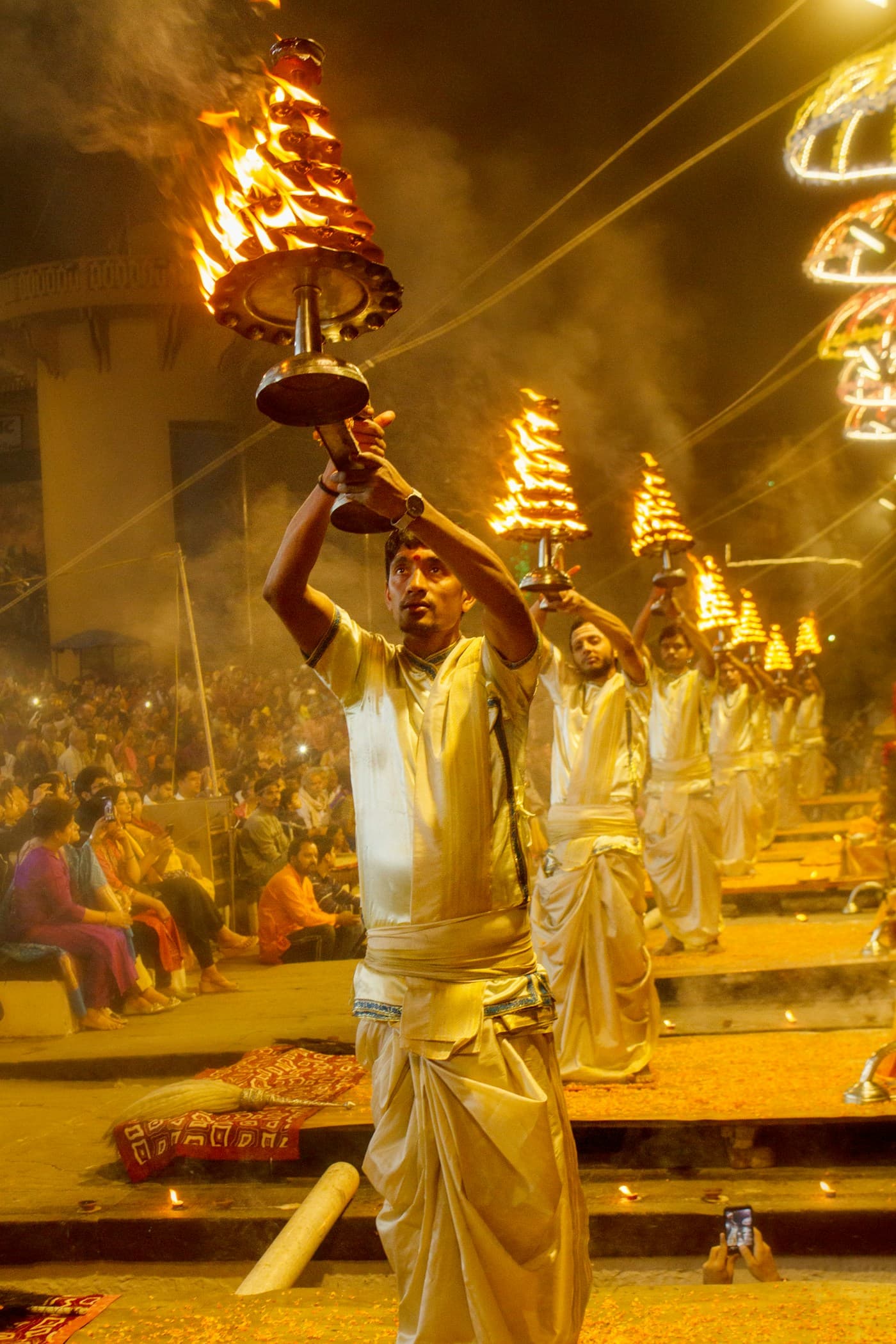
Seven priests perform in sync on wooden platforms facing the river.
What happens during the aarti
- 1
Conch & invocation
The ceremony opens with the blowing of conch shells and the invocation of Maa Ganga.
- 2
Incense & flowers
Priests wave incense and offer flowers in perfectly synchronized movements.
- 3
The great lamps
Massive multi-tiered brass lamps are circled in the air, flames reflecting on the river.
- 4
Chants & bells
Sanskrit hymns, drums and bells build to a crescendo as the crowd joins in.
- 5
Diya offering
Devotees float leaf-bowl lamps with marigolds on the water as the aarti ends.
Boat, ghat steps or Assi?
From a boat
- Full view of all priests
- No crowd crush
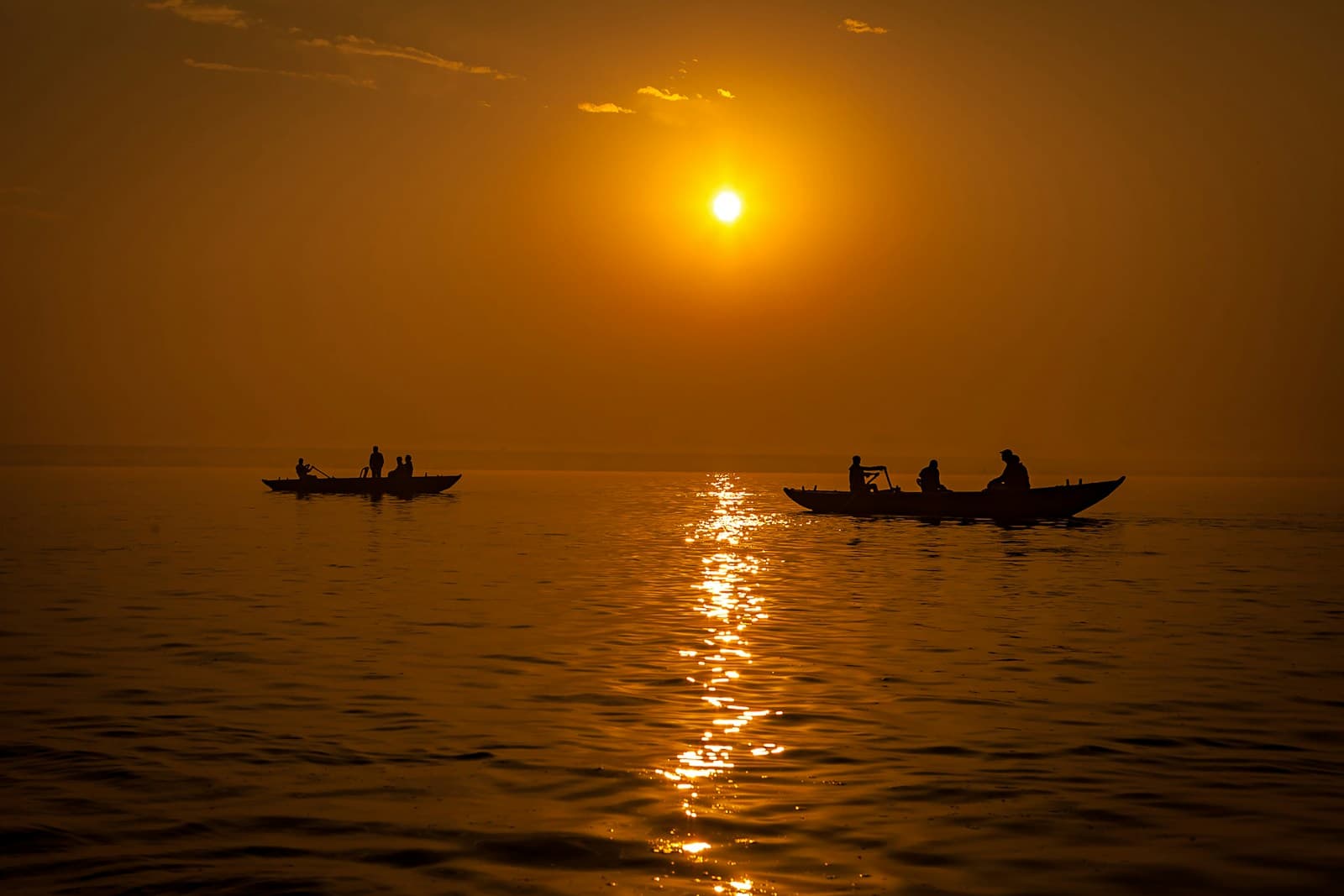
- Ride past the burning ghats at dusk
Dashashwamedh steps
- Feel the energy up close
- Hear every chant
- Free to watch
Assi Ghat
- Calmer and more local
- Easier to find space
- Great for families
Make the most of your evening
- Arrive 45–60 minutes early if you plan to sit on the steps.
- Float a diya with marigolds after the ceremony — they cost very little.
- Keep your wallet and phone in a front pocket; crowds attract pickpockets.
- Photography is allowed, but avoid flash in the priests’ faces.
- Dress modestly and be ready to remove shoes on the platforms.
- Pair it with a sunrise boat ride the next morning.
The evening aarti starts around sunset — roughly 6:45 PM in summer (April–September) and 6:00 PM in winter (October–March). The morning aarti at Assi Ghat starts around 5:00 AM.