 01
Dawn & yoga
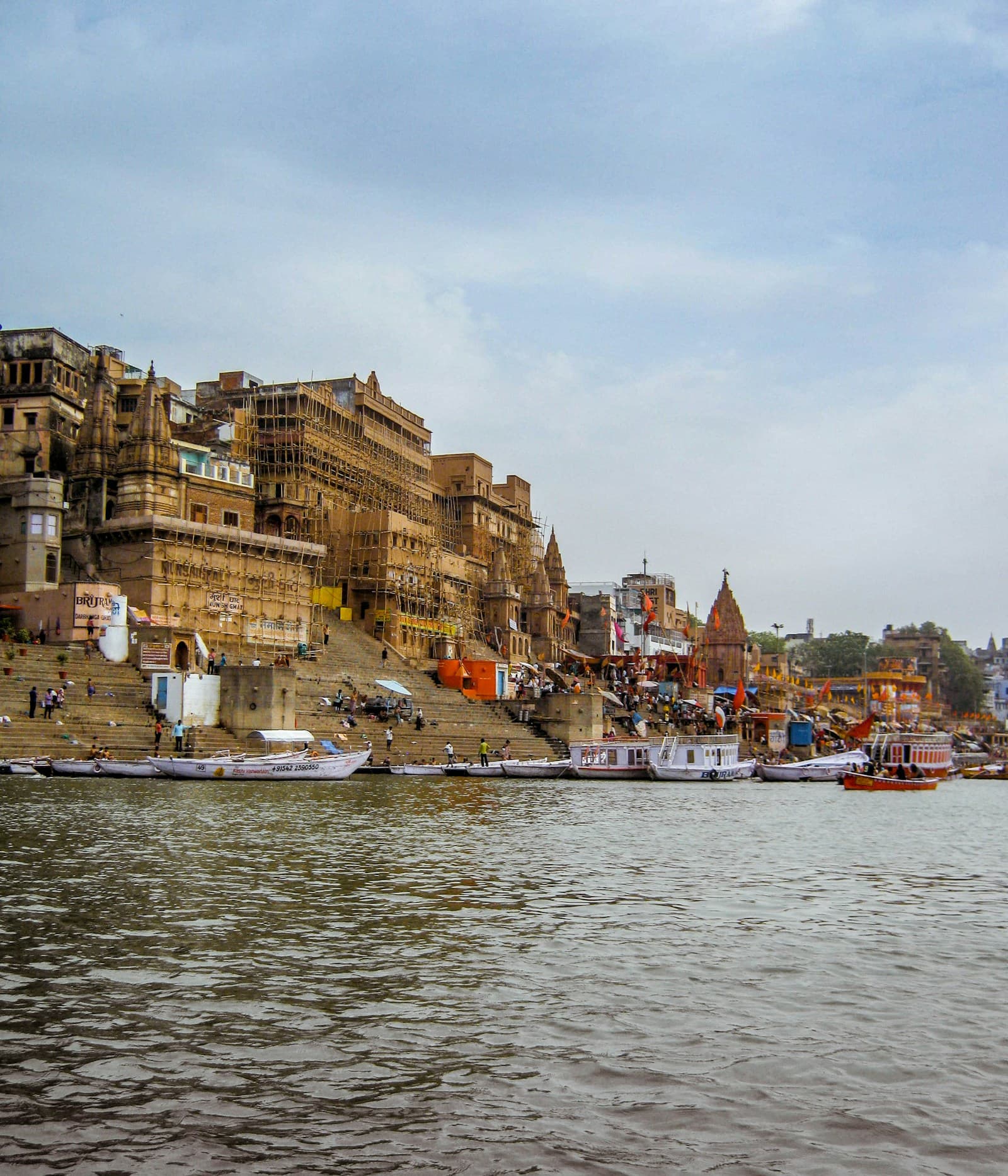
Assi Ghat
The southernmost major ghat and home of Subah-e-Banaras — the morning aarti, classical music and yoga on the steps. Relaxed, with cafés and a local crowd.
Local tip: Arrive by 5 AM for the morning programme.
Stone steps where people bathe, pray, cremate, play cricket, practise yoga and sell chai — all within a few metres. These twelve ghats tell Kashi’s story best.
01The southernmost major ghat and home of Subah-e-Banaras — the morning aarti, classical music and yoga on the steps. Relaxed, with cafés and a local crowd.
Local tip: Arrive by 5 AM for the morning programme.
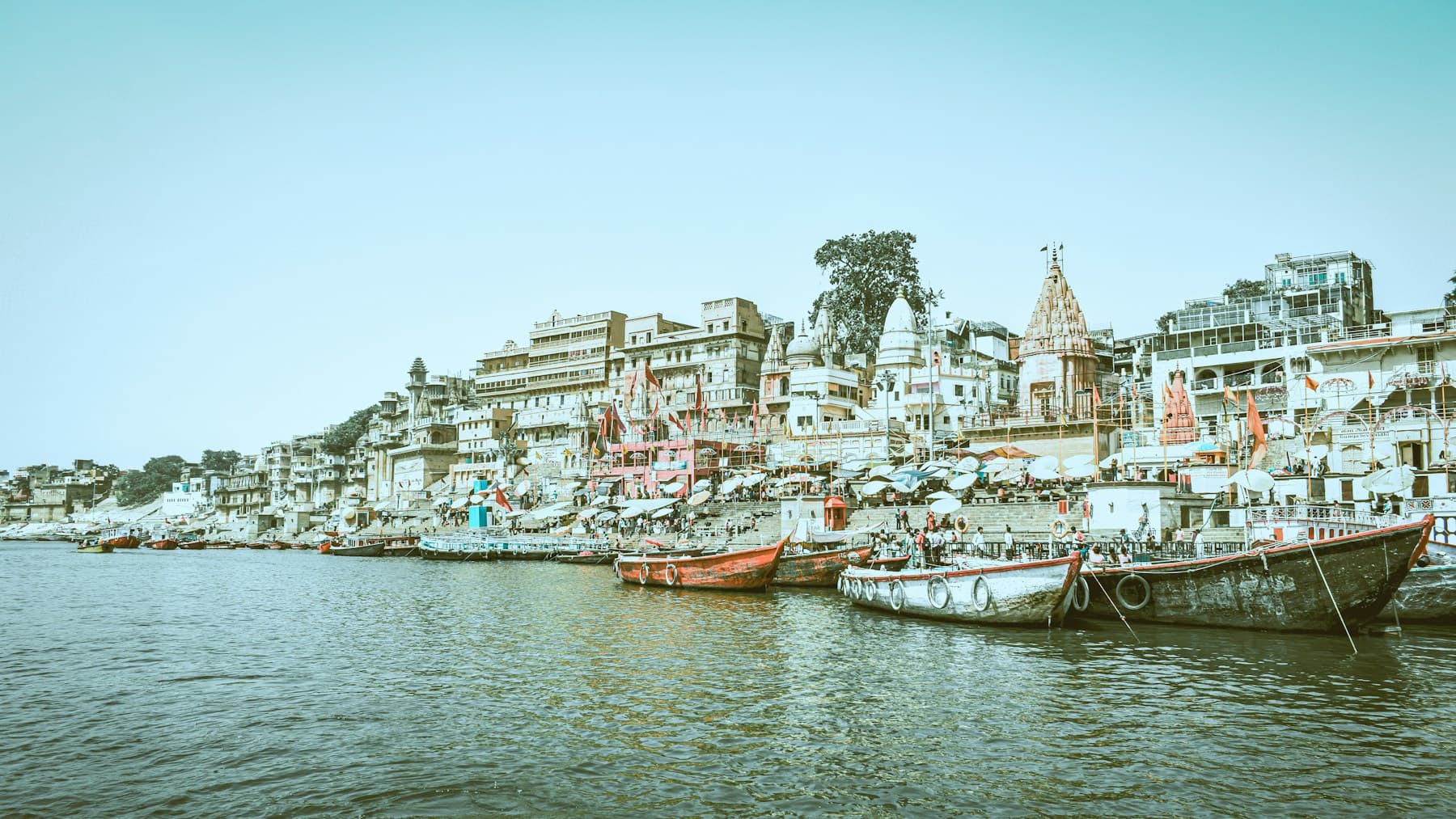
02Named after Goswami Tulsidas, who is believed to have written the Ramcharitmanas here. Hosts the Nag Nathaiya festival in Kartik.
Local tip: Quiet in the afternoons — great for sitting by the river.
 03
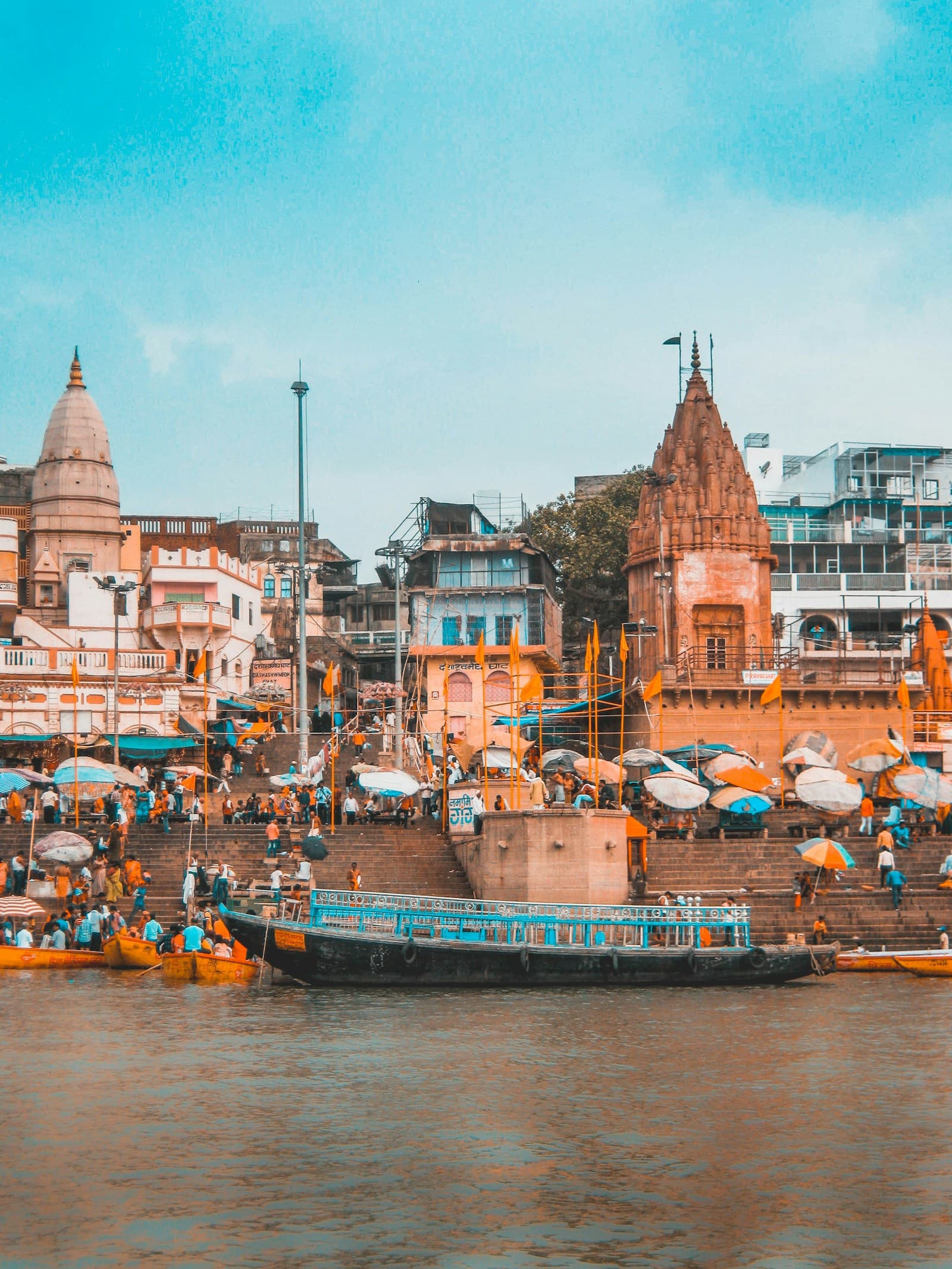
An 18th-century fort-palace built by Maharaja Chet Singh, scene of a famous battle with the British. Venue of the Budhwa Mangal festival.
Local tip: Best photographed from a boat.
 04
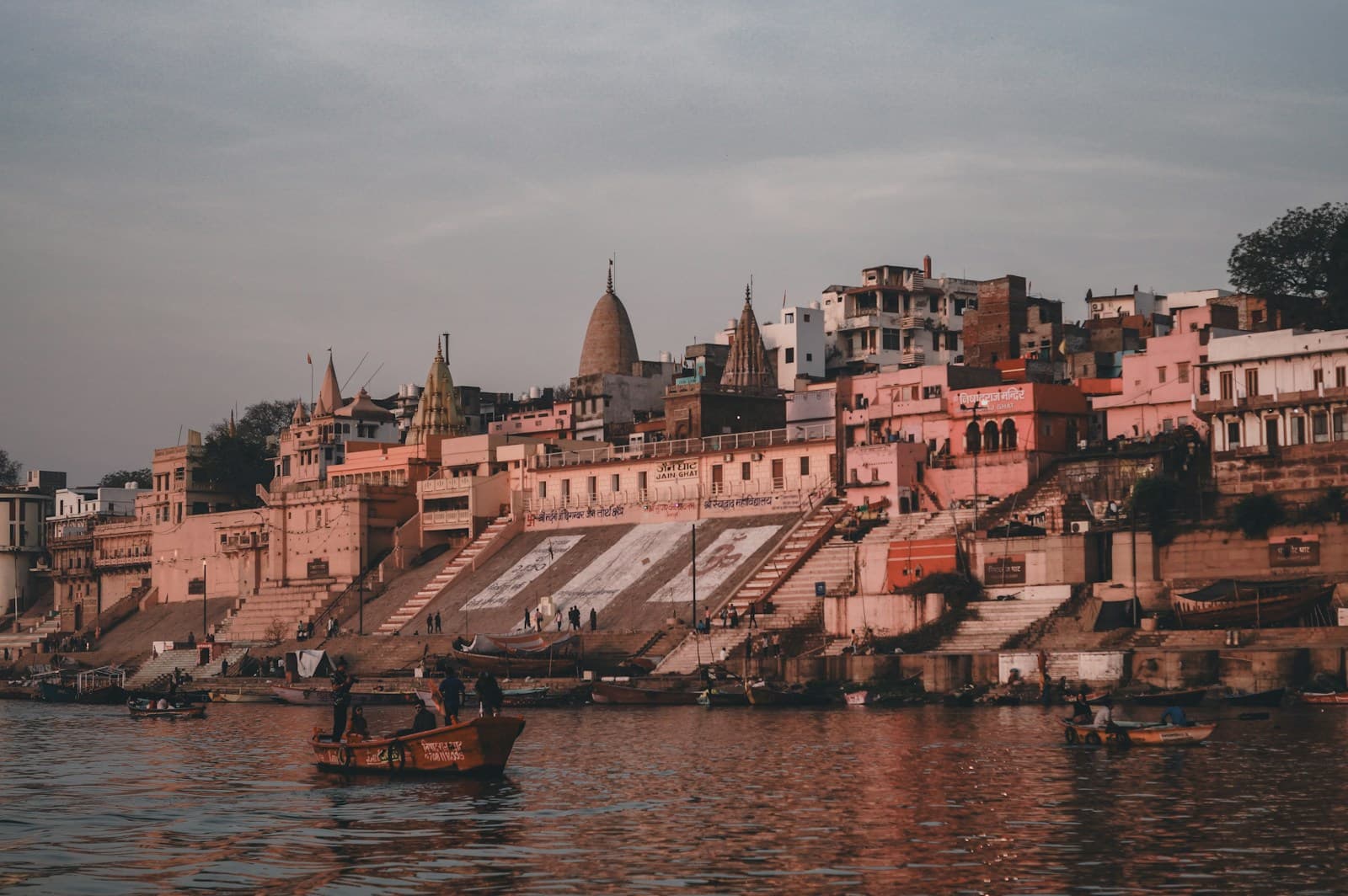
One of the two cremation ghats, tied to the legend of the truthful King Harishchandra. One of the oldest ghats in Varanasi.
Local tip: Be respectful — do not photograph cremations.
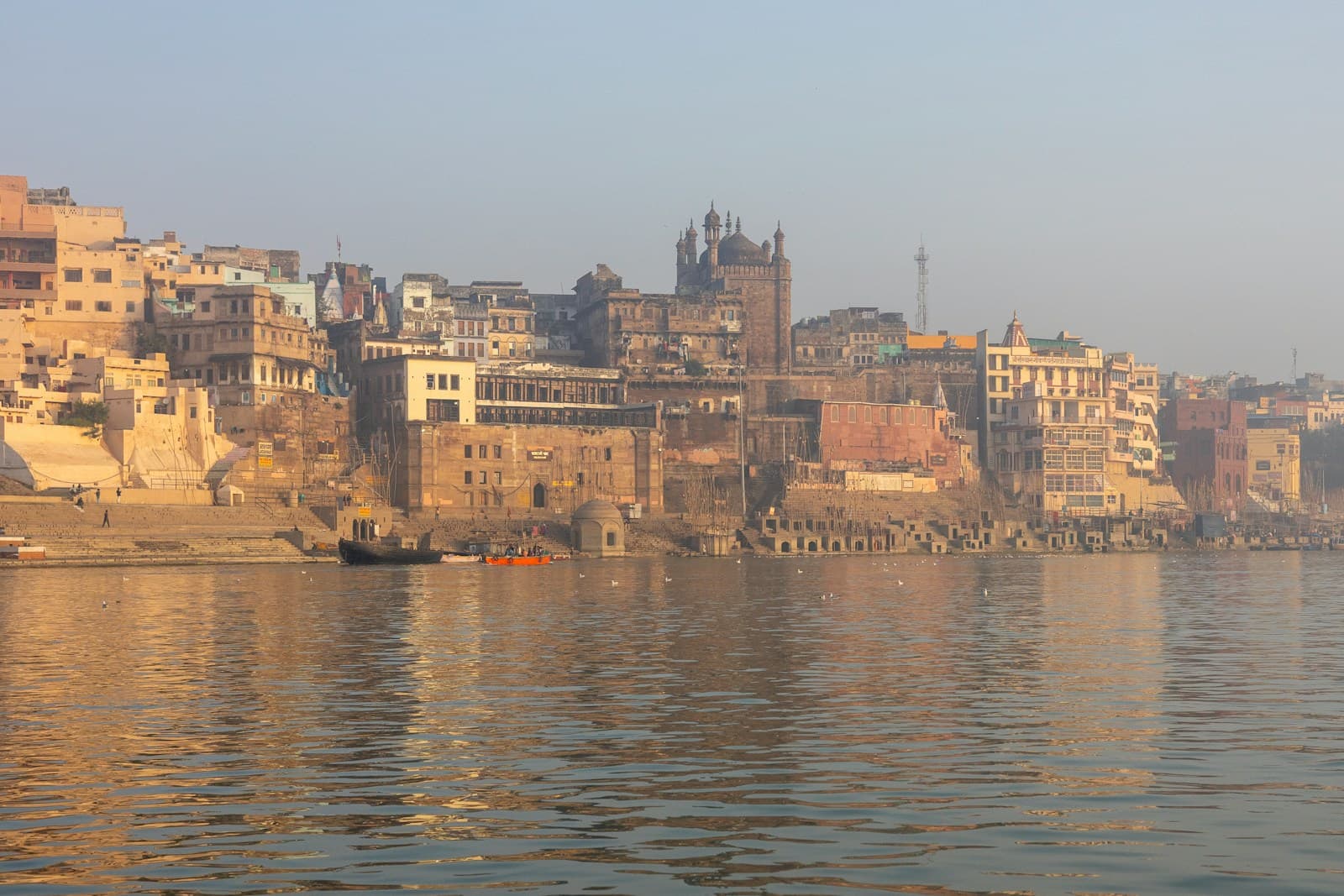 05
Instantly recognisable stripes and the Kedareshwar Shiva temple. A favourite of pilgrims from South India.
Local tip: Beautiful in the late-afternoon light.
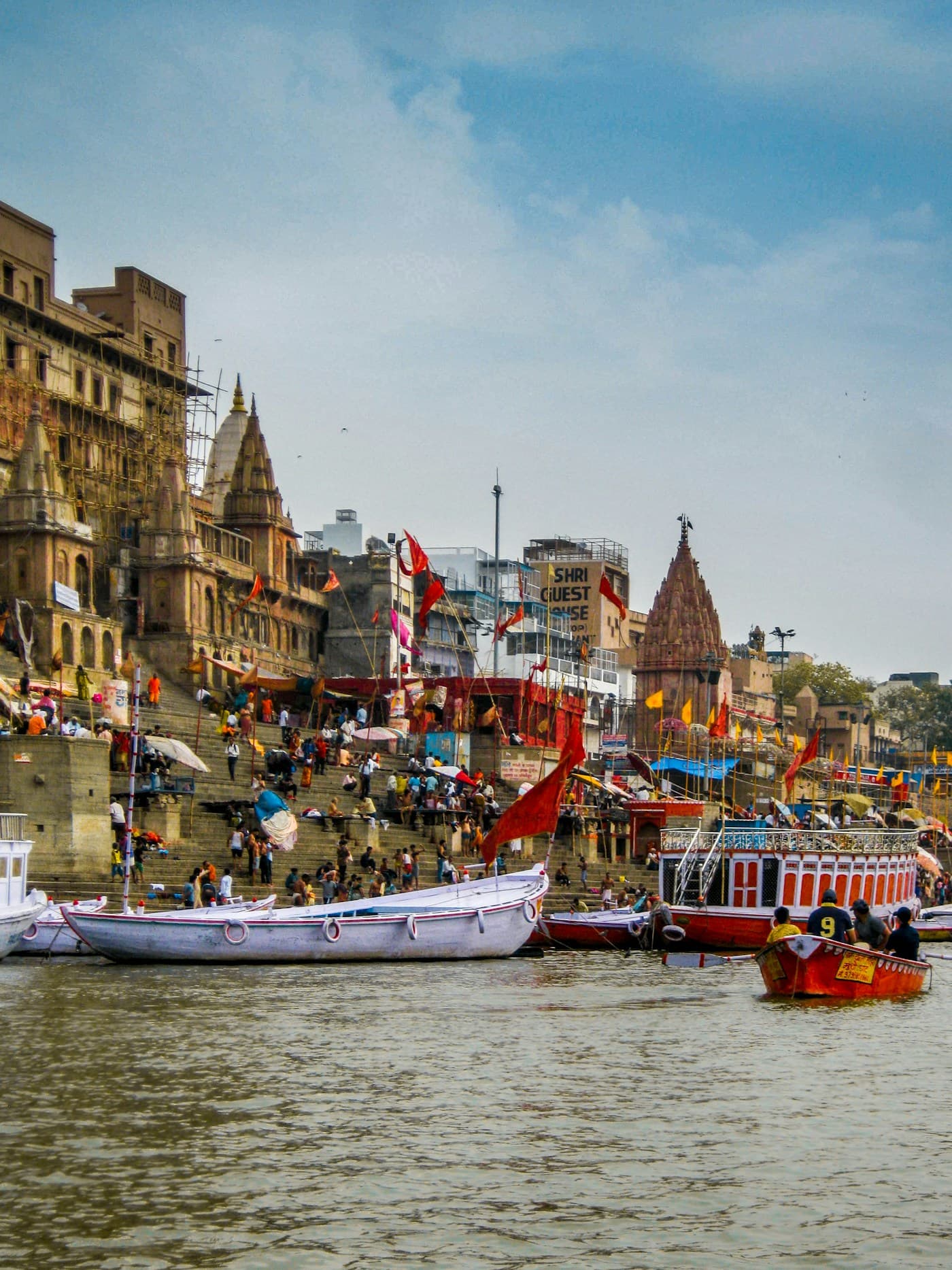 06
A grand sandstone palace built by the royal family of Darbhanga, now a heritage hotel. One of the most photographed facades on the river.
Local tip: Walk here from Dashashwamedh at sunset.
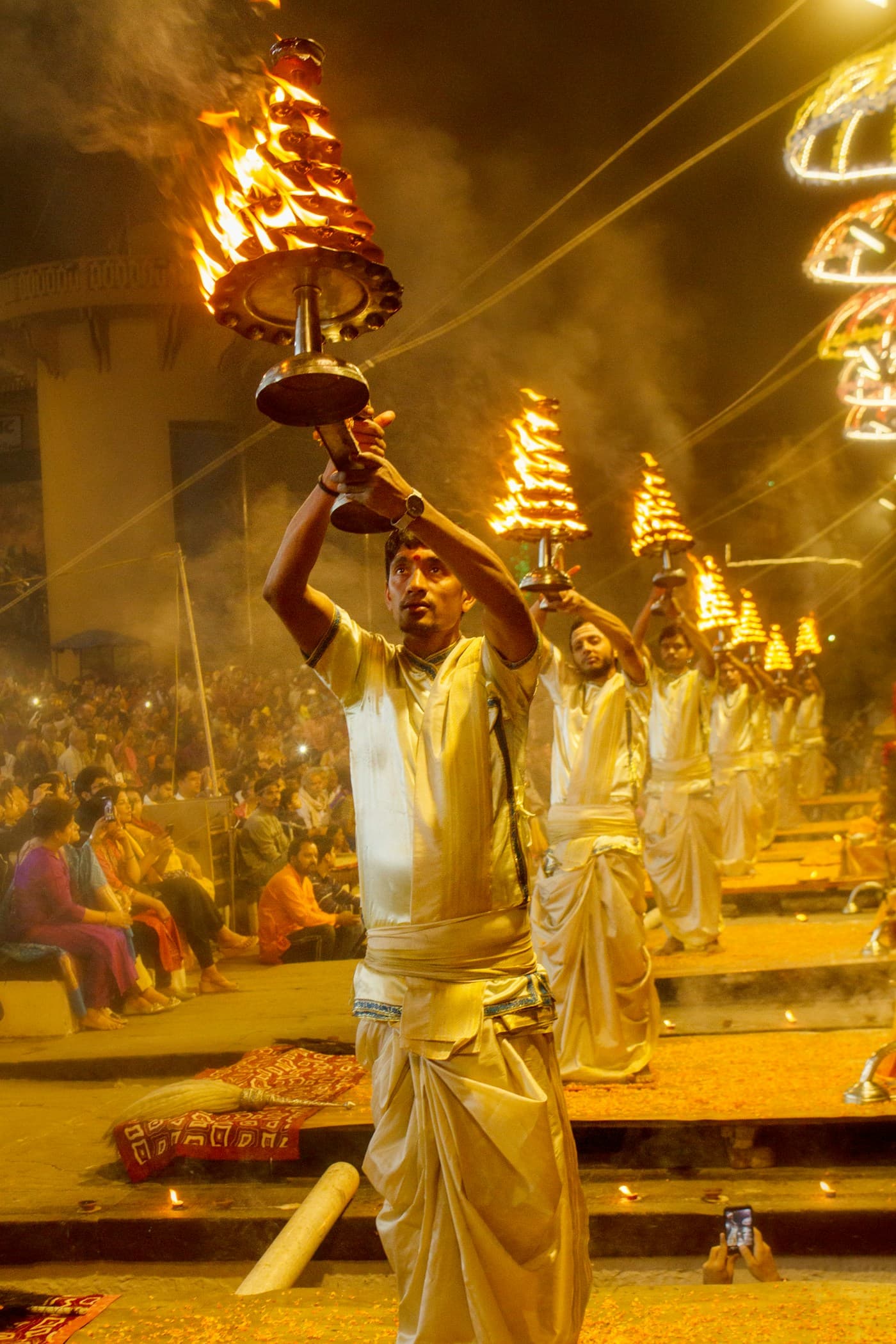 07
The busiest and most spectacular ghat — legend says Lord Brahma performed the ten-horse sacrifice here. Home of the famous evening Ganga Aarti.
Local tip: Arrive 45–60 minutes early for the aarti, or watch from a boat.
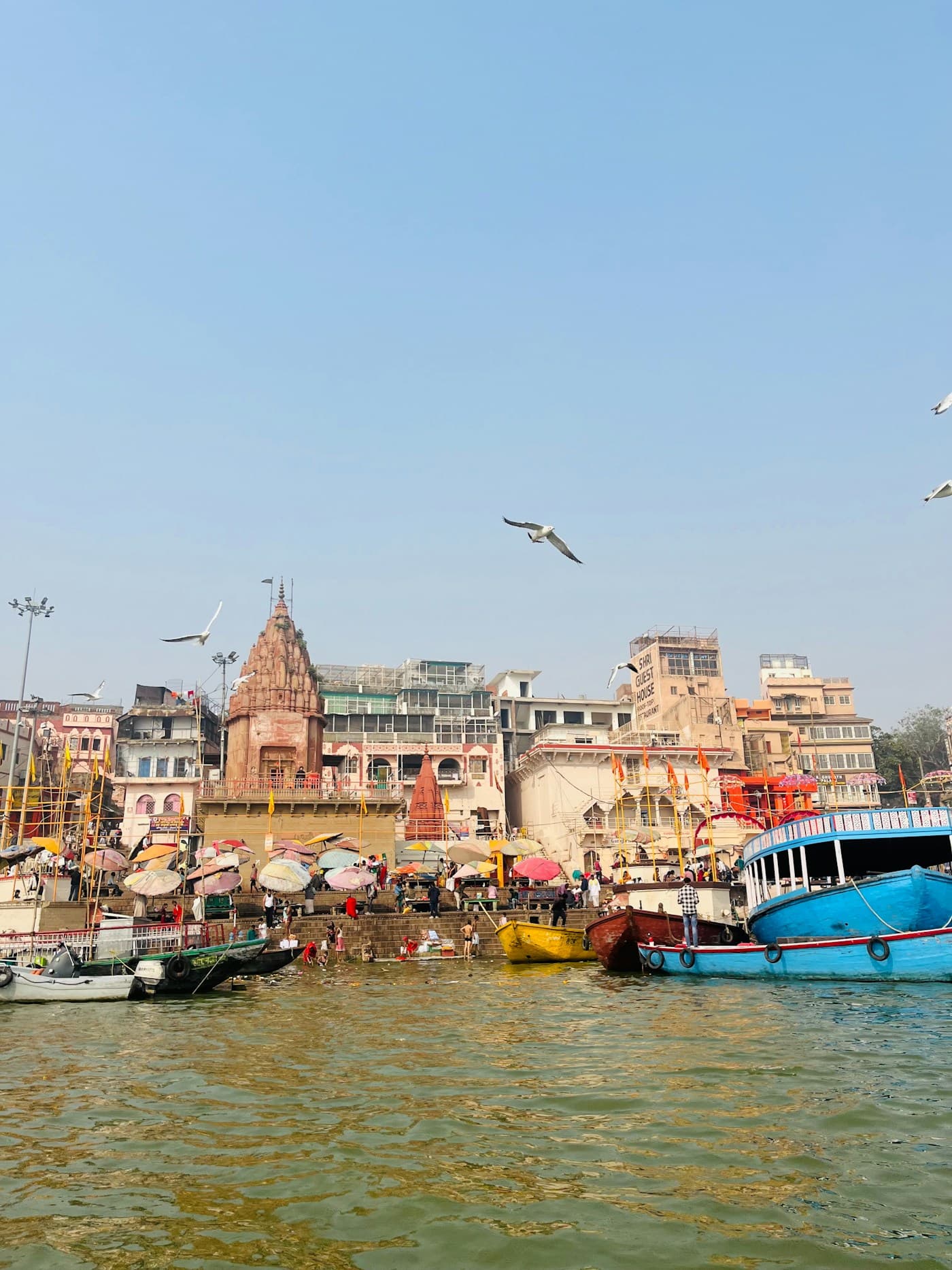 08
Features a Rajput palace with an 18th-century astronomical observatory built by Sawai Jai Singh II.
Local tip: Look for the stone instruments on the rooftop.
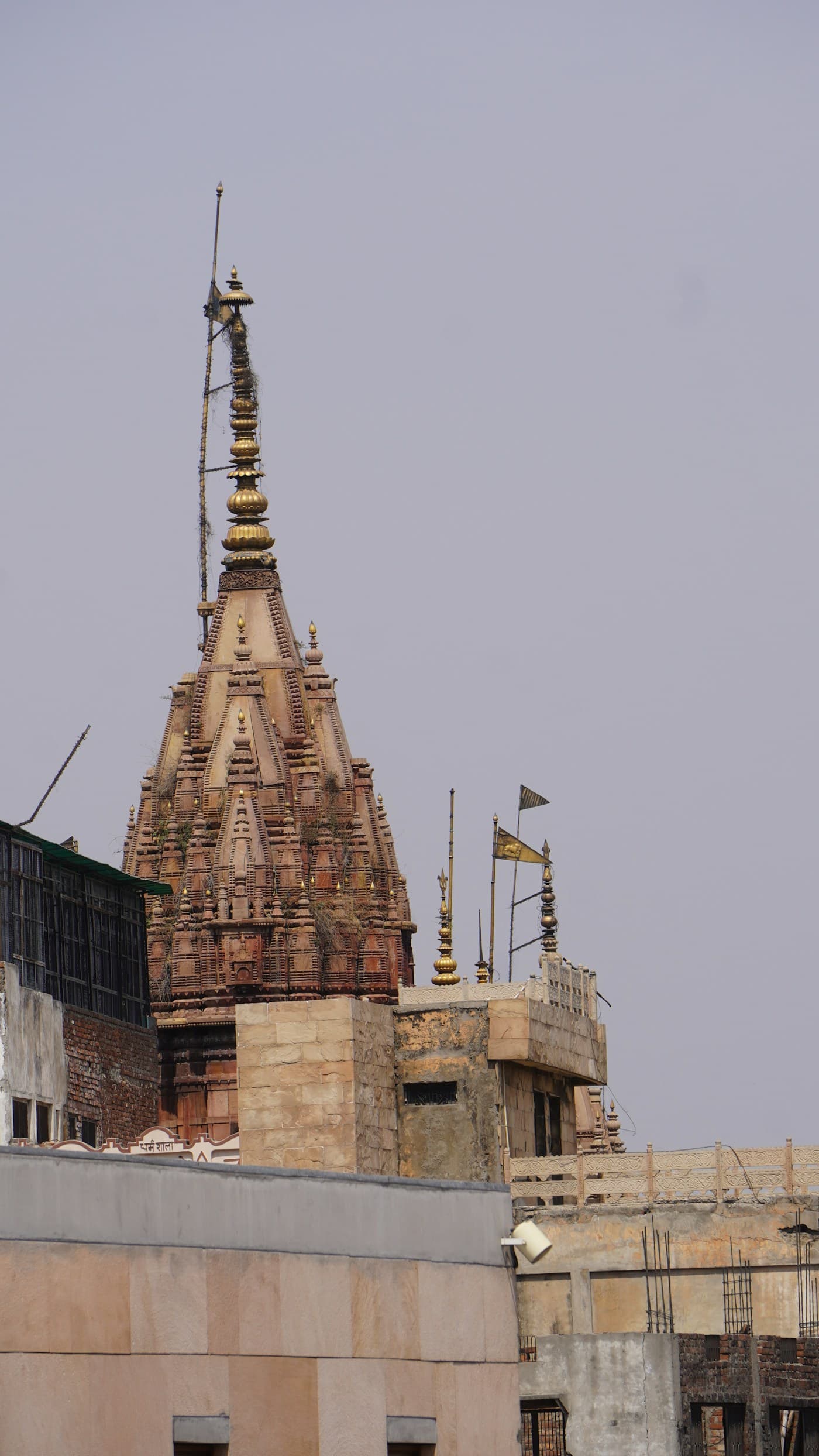 09
Now the river entrance to the Kashi Vishwanath Dham corridor. Also home to the wooden Nepali Temple.
Local tip: Start your temple visit from the river side.
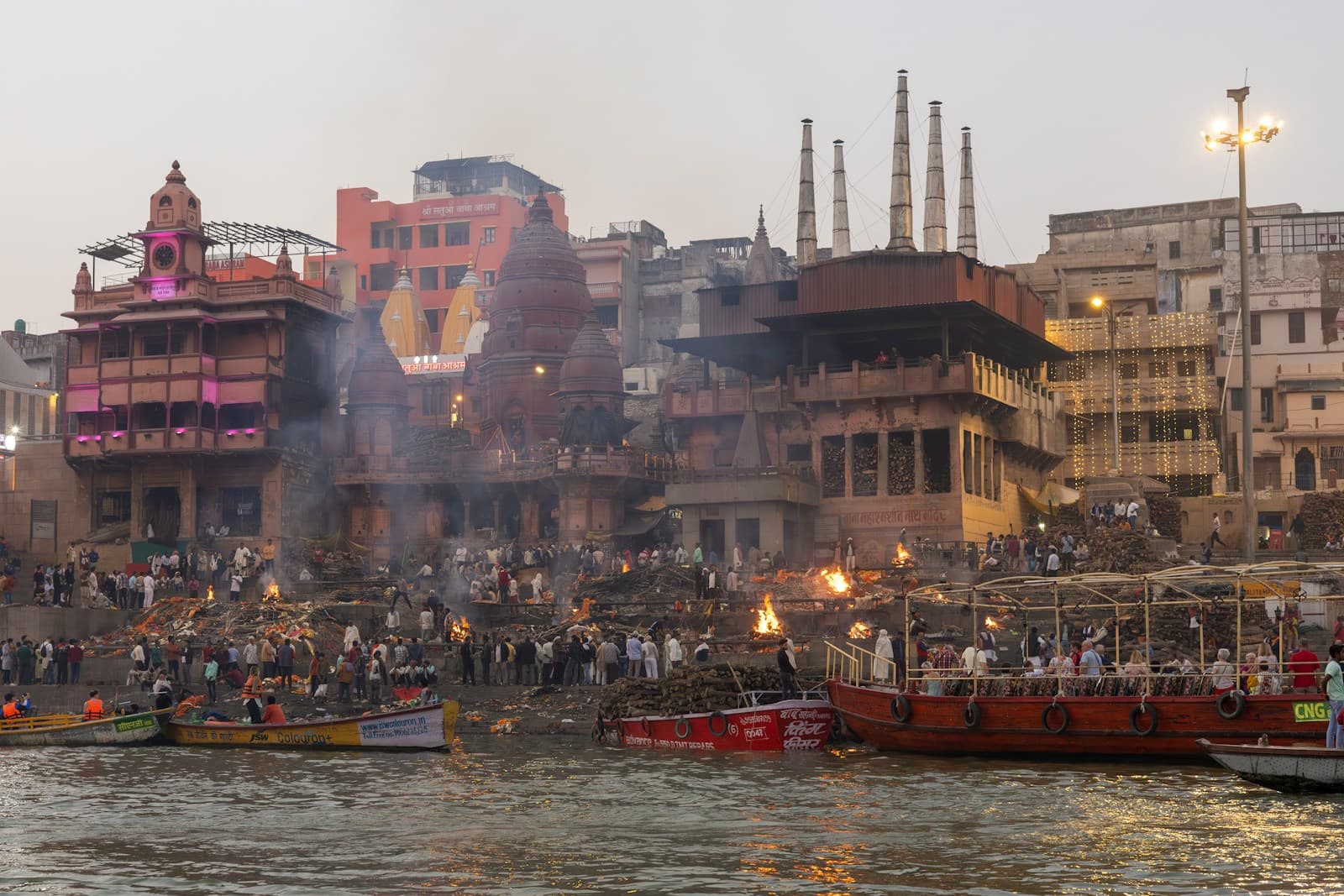 10
The main cremation ghat, where funeral pyres have burned day and night for centuries. Dying in Kashi is believed to grant moksha.
Local tip: Visit with a guide and keep your camera away.
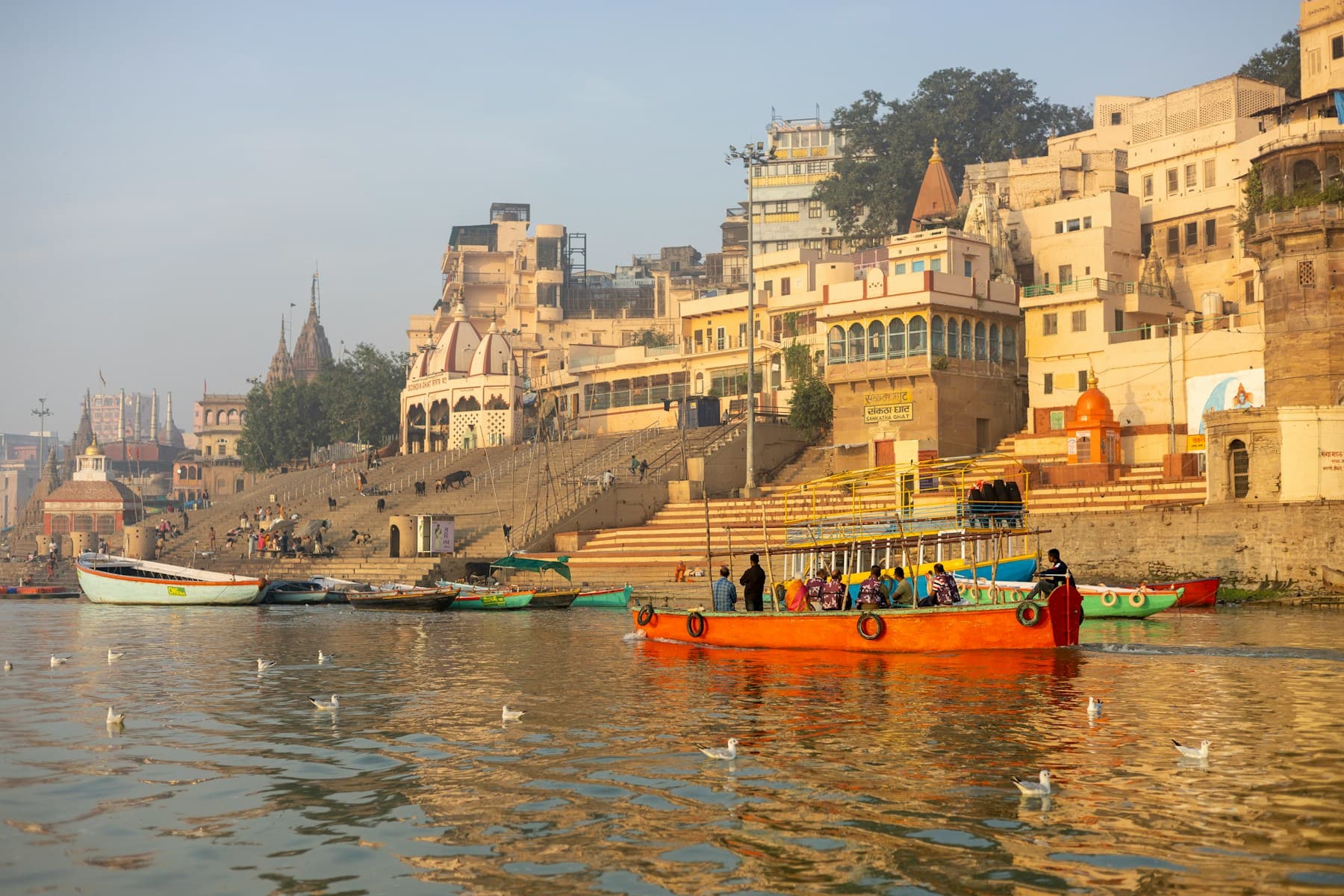 11
Famous for its partially submerged Shiva temple, which tilted into the river under the weight of the ghat.
Local tip: A short walk north of Manikarnika.
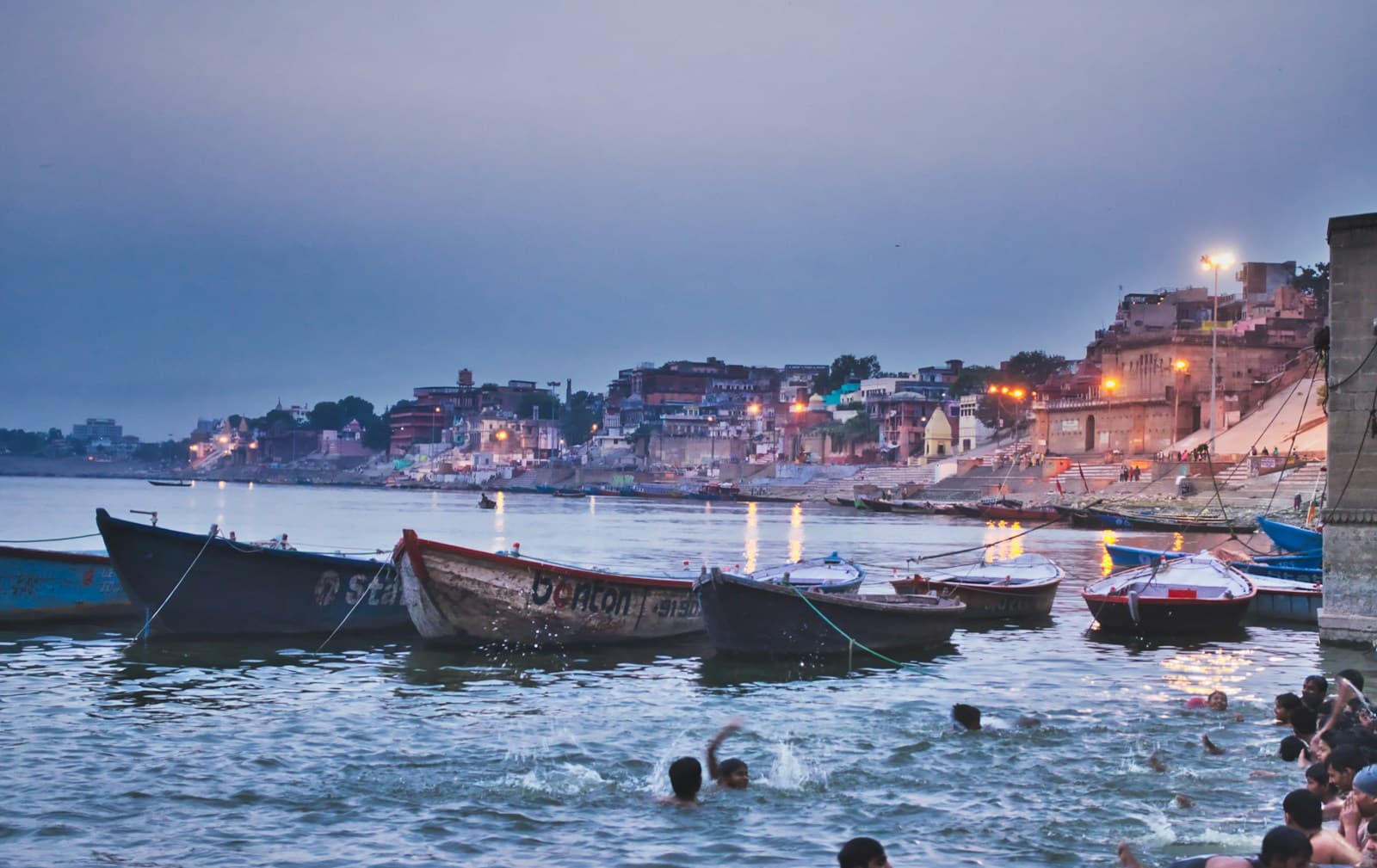 12
Believed to be the meeting point of five sacred rivers. Overlooked by the Alamgir Mosque and famous for its Kartik lamp towers.
Local tip: Very peaceful at dawn.