Temples of Kashi: a darshan guide
Varanasi is said to have a temple on every corner. These are the ones that matter most — with practical tips so your darshan is calm and meaningful.
Shri Kashi Vishwanath Temple
One of the twelve Jyotirlingas and the spiritual heart of Varanasi. The Kashi Vishwanath Dham corridor now links the temple to the Ganga.
- Phones, bags and leather items are not allowed — use the lockers
- Mondays and the Sawan month are very crowded
- Early morning is usually calmest
Annapurna Devi Temple
The goddess of food and nourishment, right next to Kashi Vishwanath. Devotees believe no one in Kashi sleeps hungry by her grace.
- Visit together with Kashi Vishwanath
- Special celebrations during Annakut after Diwali
Kaal Bhairav Temple
The fierce guardian ("Kotwal") of Kashi. Locals say a visit to Varanasi is incomplete without his darshan.
- Sundays and Tuesdays see the most devotees
- Narrow lane approach — walk from Maidagin
Sankat Mochan Hanuman Temple
Founded by Goswami Tulsidas. Famous for its besan laddoo prasad and the Sankat Mochan Sangeet Samaroh music festival.
- Phones not allowed inside
- Tuesdays and Saturdays are busy
Durga Kund Temple
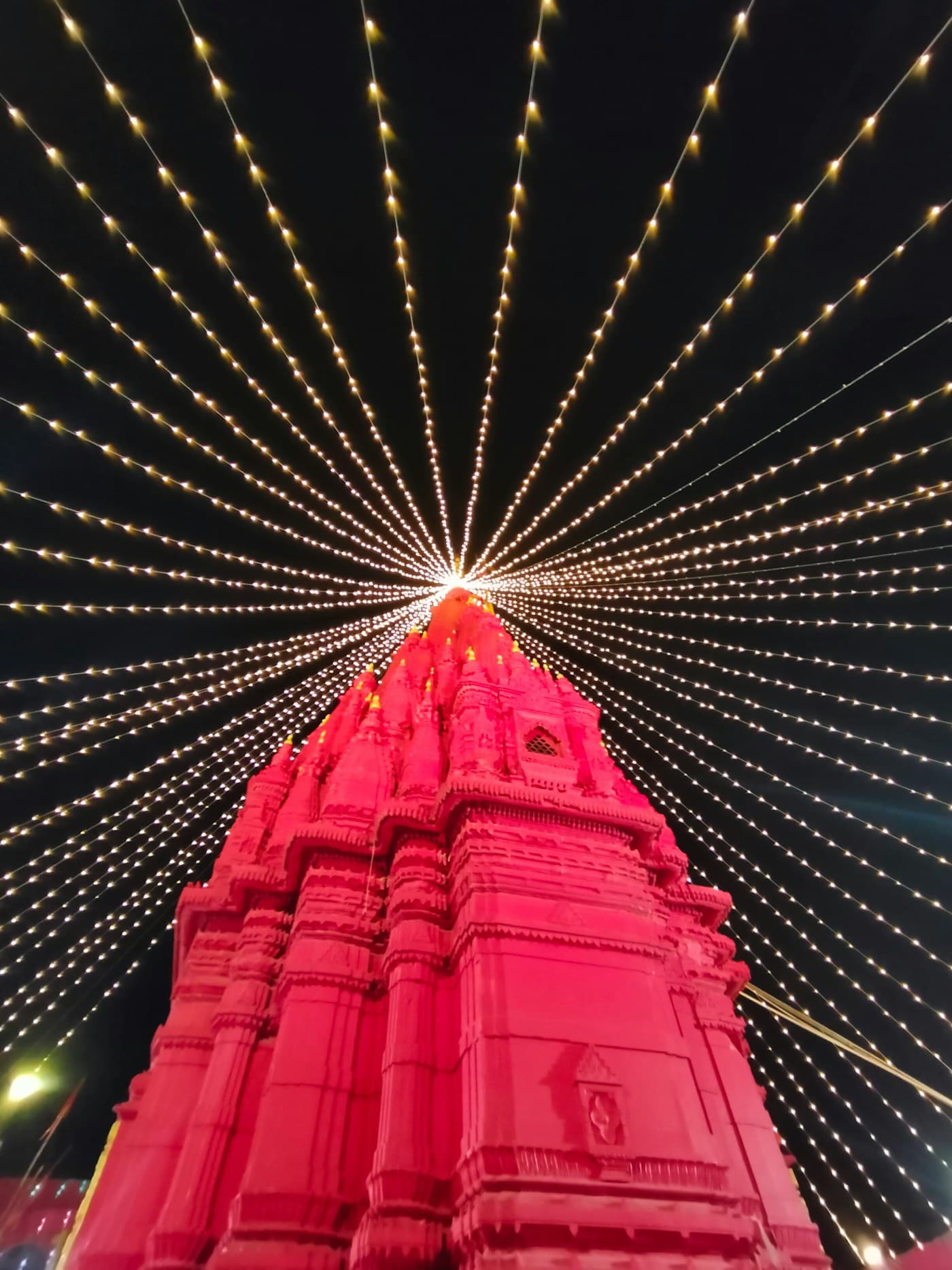
An 18th-century temple in striking red stone beside a large tank. Especially vibrant during Navratri.
- Combine with Tulsi Manas Mandir nearby
Tulsi Manas Mandir
A white marble temple where the entire Ramcharitmanas is inscribed on the walls, at the spot where Tulsidas is believed to have written it.
- Calm and spacious — good with kids
New Vishwanath Temple (BHU)
Inside Banaras Hindu University, with one of the tallest temple towers in India. Open to people of all faiths.
- Explore the BHU campus and Bharat Kala Bhavan museum
Mulagandha Kuti Vihar, Sarnath
A Buddhist temple at Sarnath with murals of the Buddha’s life by Japanese artist Kosetsu Nosu, beside the sacred Bodhi tree.
- Pair with Dhamek Stupa and the Sarnath museum
Six things to know before darshan
Temple timings change for festivals and special aartis — please check locally on the day of your visit.
- 1Remove footwear before entering — most temples have shoe stands.
- 2Phones, cameras and bags are not allowed in several temples; use the lockers.
- 3Dress modestly, with shoulders and knees covered.
- 4Follow the queue and the priests’ instructions inside the sanctum.
- 5Offerings (flowers, bel patra, prasad) are optional and sold outside.
- 6Avoid carrying leather items into temple premises.